An autonomous software factory · invite-only beta
Describe an app.
Get it built, reviewed and live.
An architect turns your sentence into a plan. An engineer builds each change in a sandbox. An independent reviewer approves it or refuses it. Approved work deploys to a URL — inside a daily budget the factory cannot exceed.
- Runs on Cloudflare's network
- Every build sandboxed
- Hard budget ceilings
- Reviewed before anything ships
How it works
Four moments from one factory.
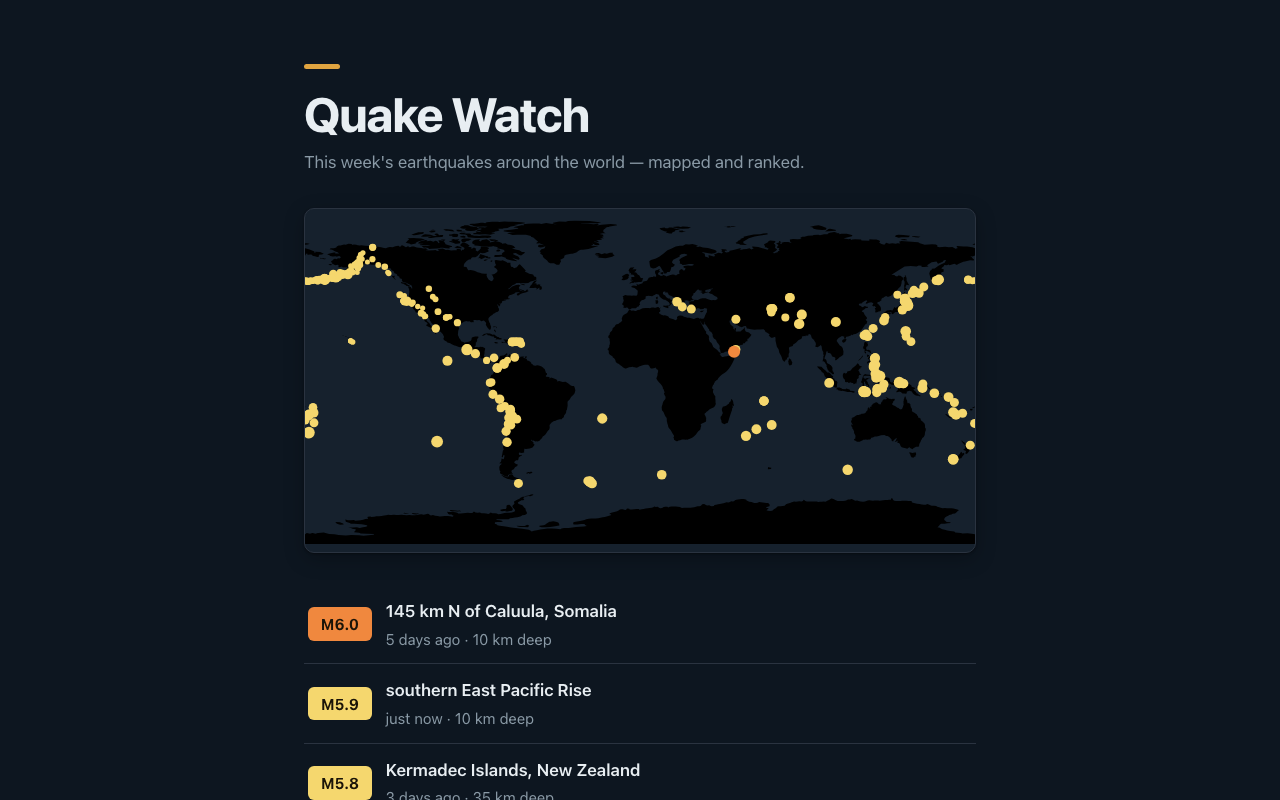
Quake Watch was described in one sentence and cost $3.95 to build. These are the dashboard's own screens along the way.
- 01
Describe it
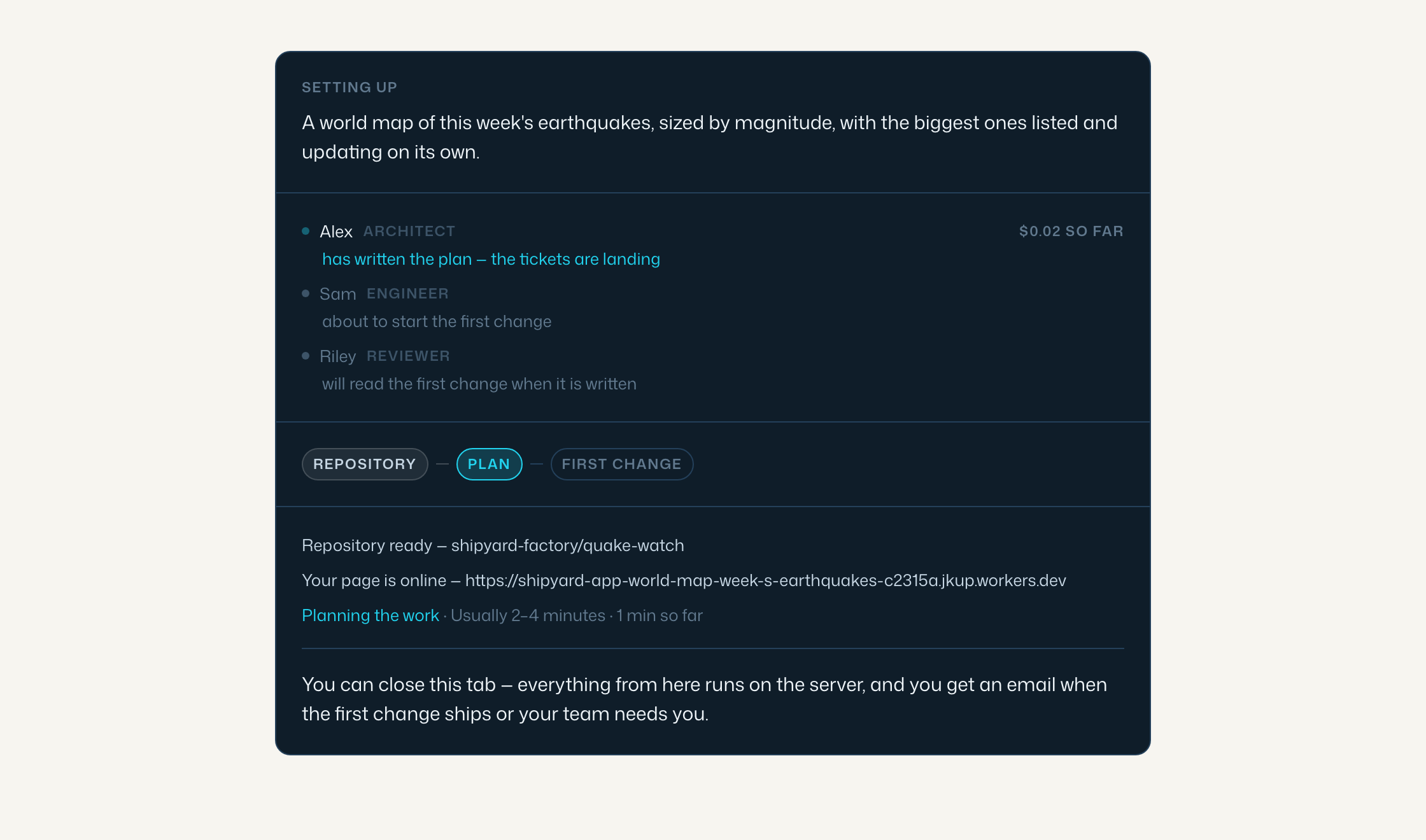
One sentence. The repository is created, the page is online, and Alex the architect writes a plan you can read — tickets with acceptance criteria, not a spinner. Close the tab; it runs on the server.
- 02
Watch it get built
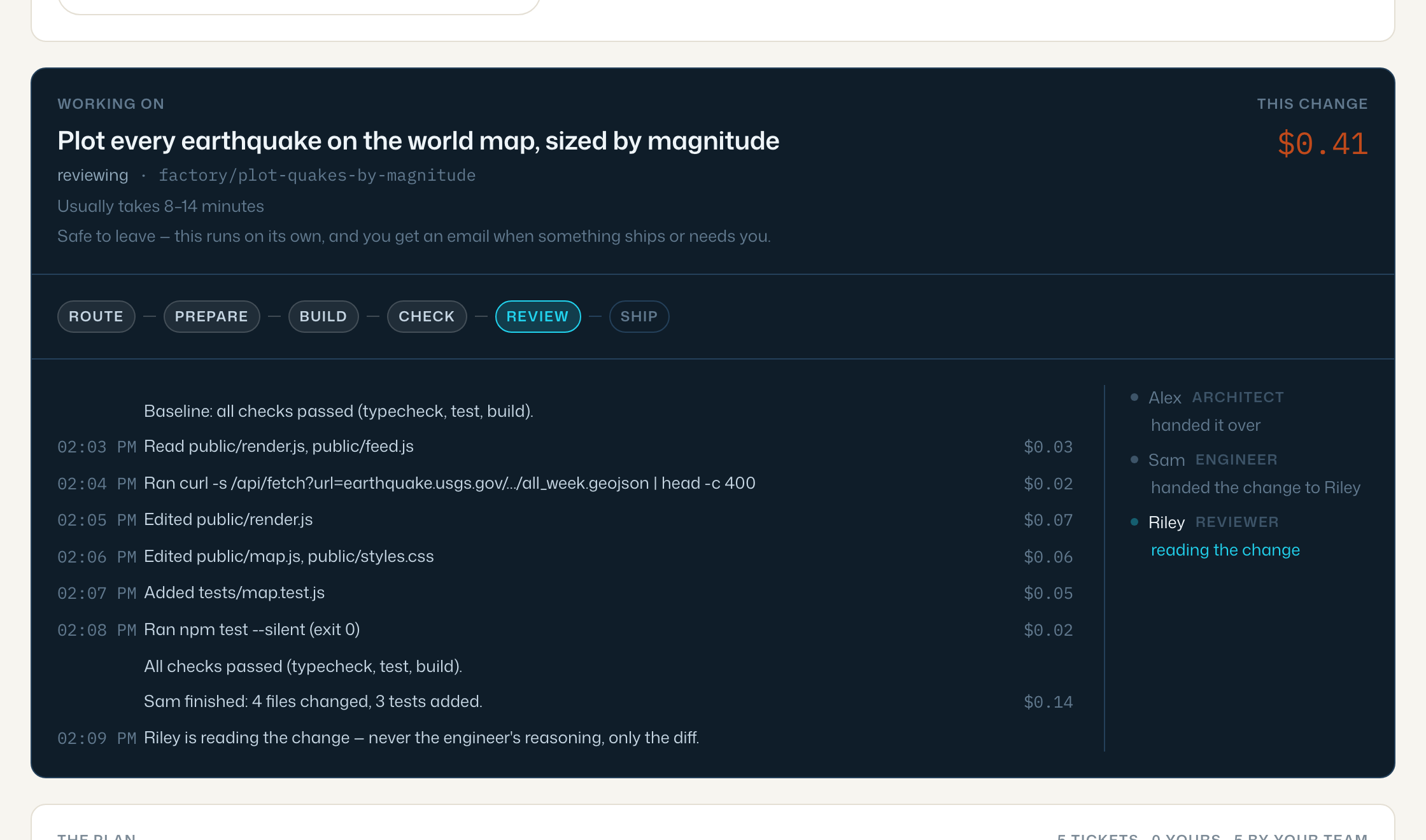
Sam the engineer works in a sandbox that is destroyed after the run: reads the files, runs the project's own checks, and hands the diff to Riley. Every step lands on the timeline with what it cost.
- 03
It asks when it should
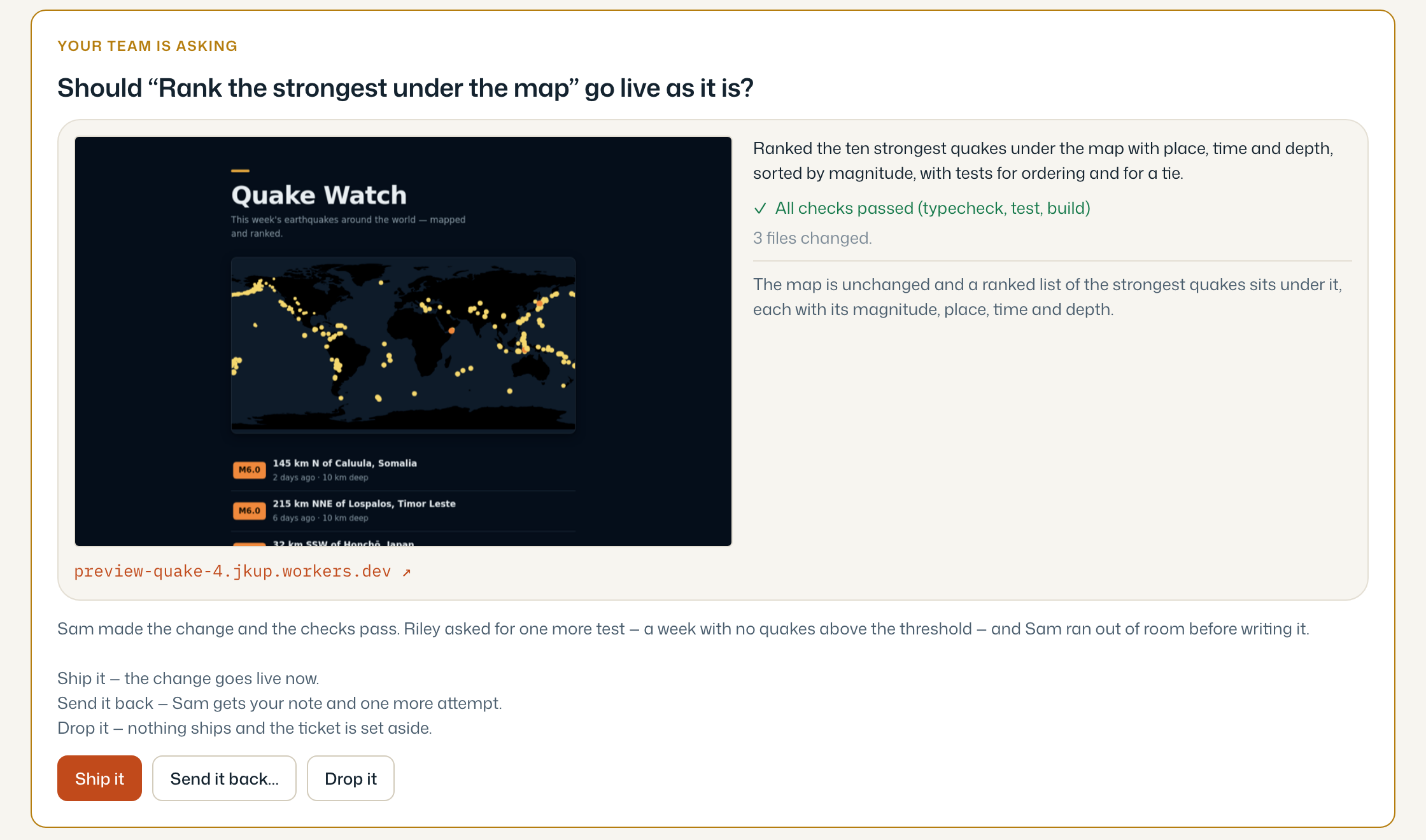
Riley reviews without ever seeing Sam's reasoning, and refuses when a test is missing. When the team can't settle it, you get the question, a preview of the change, and three buttons.
- 04
It ships
Approved work merges and deploys to a URL you can open. The factory looks at the live page itself and says whether it shows what was asked for. Five changes, $3.95, nobody sat and watched.
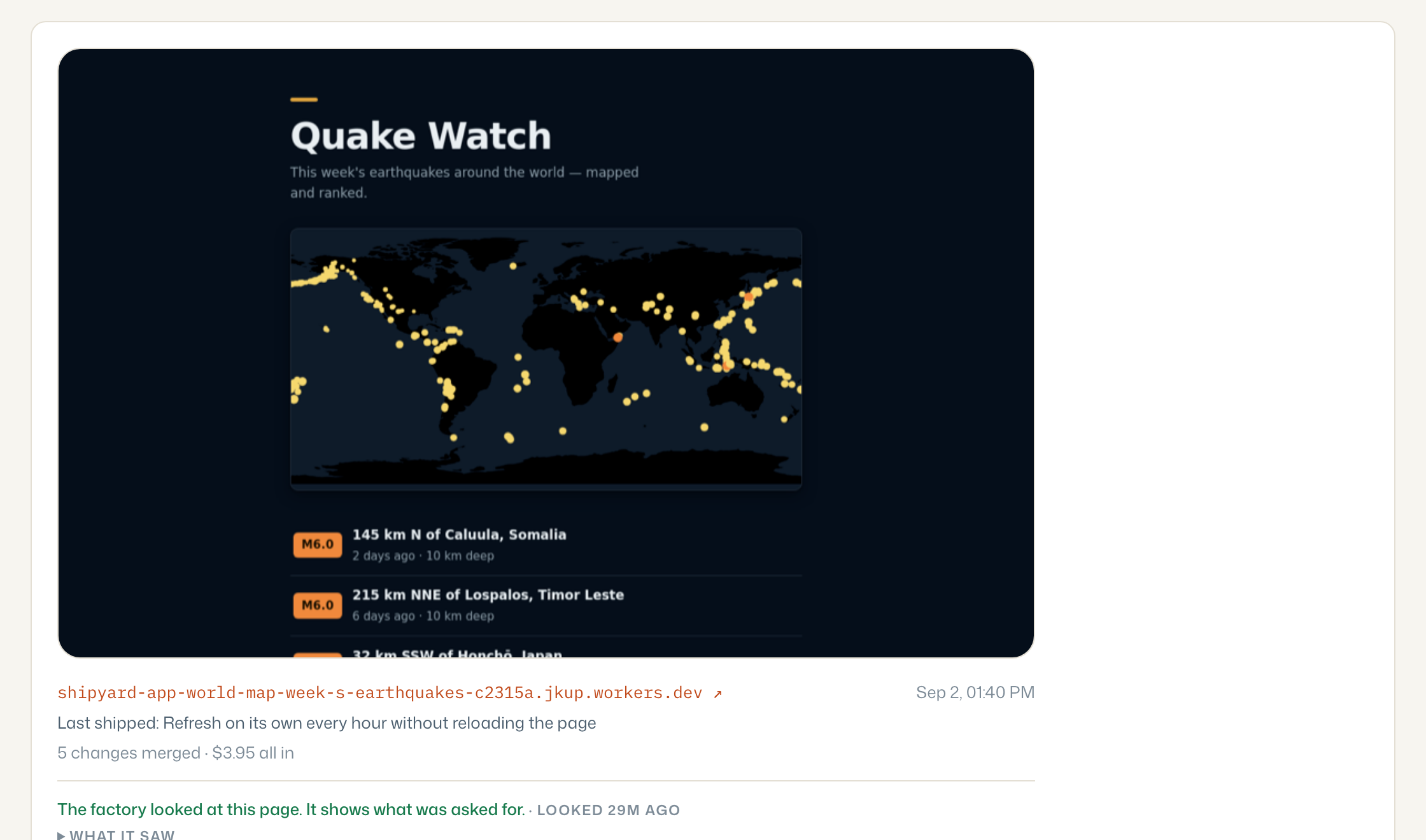
Staged states of a real product. Quake Watch's brief, its cost and the page in the picture are from the ledger; the run and the question are the dashboard as it looks mid-build.
On the factory's own ledger, since it started building for other people:
- 98
- pull requests merged
- $0.51
- of model spend per merged change
- 44 of 124
- changes the reviewer refused first
Each on a repository you own, that you can still read.
Everything it spent, divided by what shipped — not by what ran.
Sent back for repair or handed to a person. Not a rubber stamp.
Read from the factory's own database, 30 August 2026.
Built unattended
Seven products nobody sat and watched.
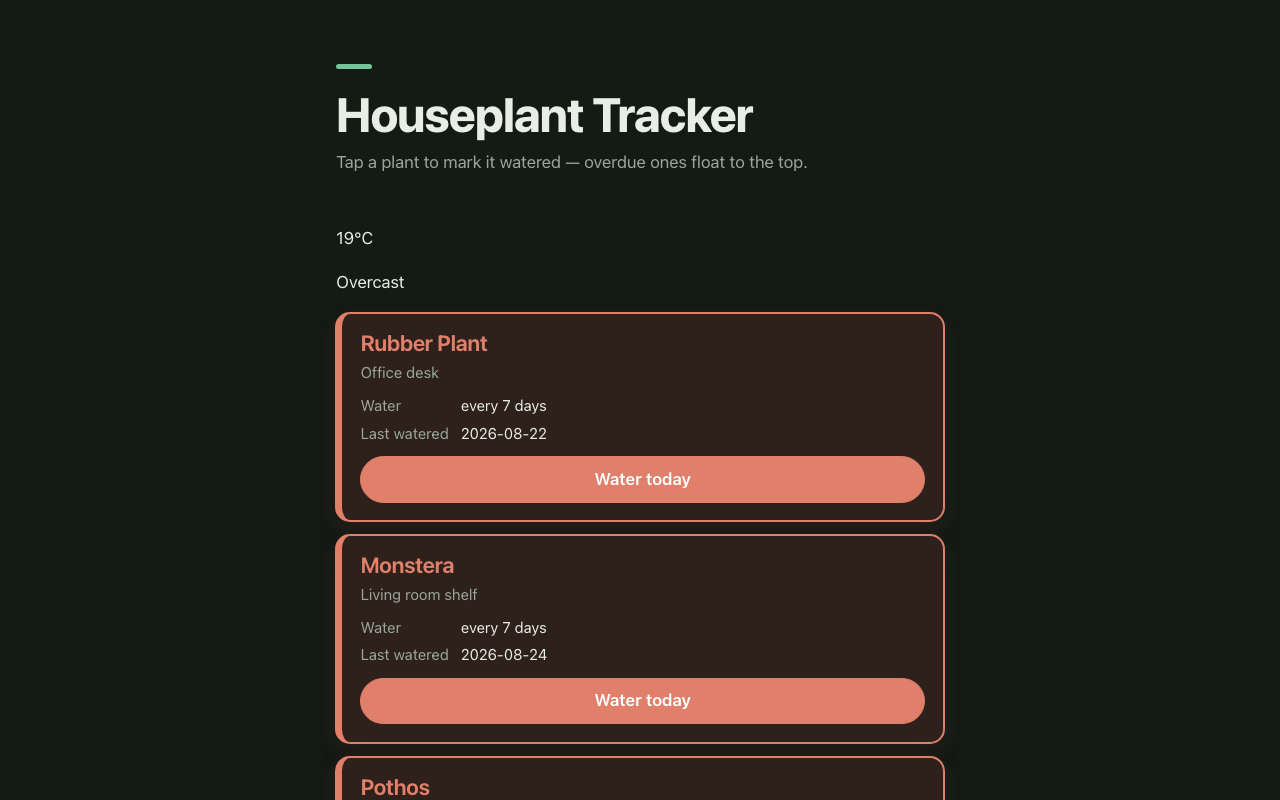
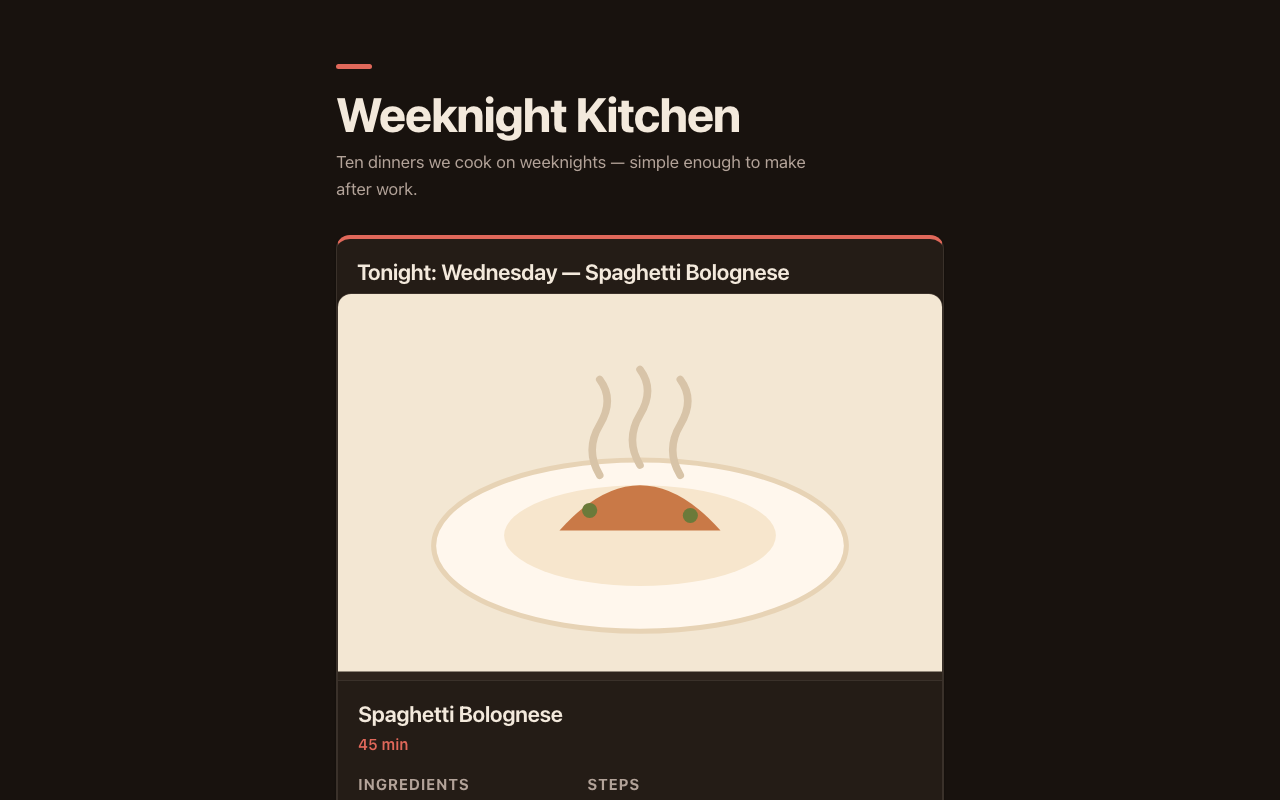
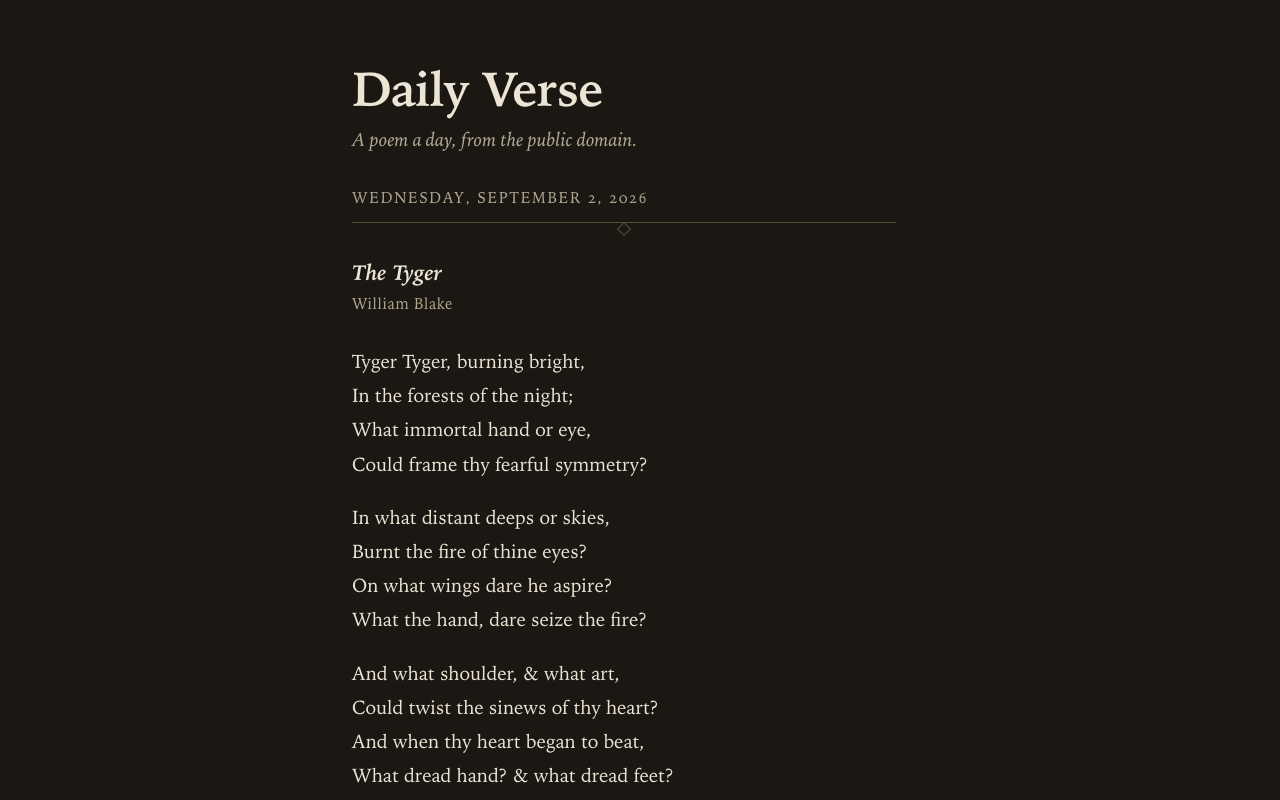
Each one was a sentence typed into the box above, then planned, built, reviewed and deployed by a factory on its own. The words are exactly what was typed. Open them — they are the live pages, not pictures of them.
Asked for
A one-page plant watering tracker for my flat. I have about a dozen houseplants — show each one with its name, where it lives, how often it needs water, and when it was last watered, and let me tap a plant to mark it watered today. Sort the ones that are overdue to the top and make them obviously stand out. Use the browser's local storage so my watering history survives a refresh. Show today's local weather from the free Open-Meteo API (no key needed) so I know if it's a hot week and things need water sooner.
Houseplant Tracker
4 changes · $1.56 all in
-
Asked for
A small recipe site for my family's ten favourite weeknight dinners. Each recipe has ingredients, steps, cook time and a photo placeholder; the home page lists them with a filter by cook time, a "surprise me" button that picks one at random, and a "tonight" suggestion that changes with the day of the week. Warm, simple, easy to read on a phone in the kitchen.
Weeknight Kitchen
4 changes · $2.14 all in
-
Asked for
A world map of this week's earthquakes, sized by magnitude, with the biggest ones listed and updating on its own.
Quake Watch
5 changes · $3.95 all in
-
Asked for
A daily poetry site — one public-domain poem each day, beautifully typeset, with an archive of past days.
Daily Verse
4 changes · $1.78 all in
-
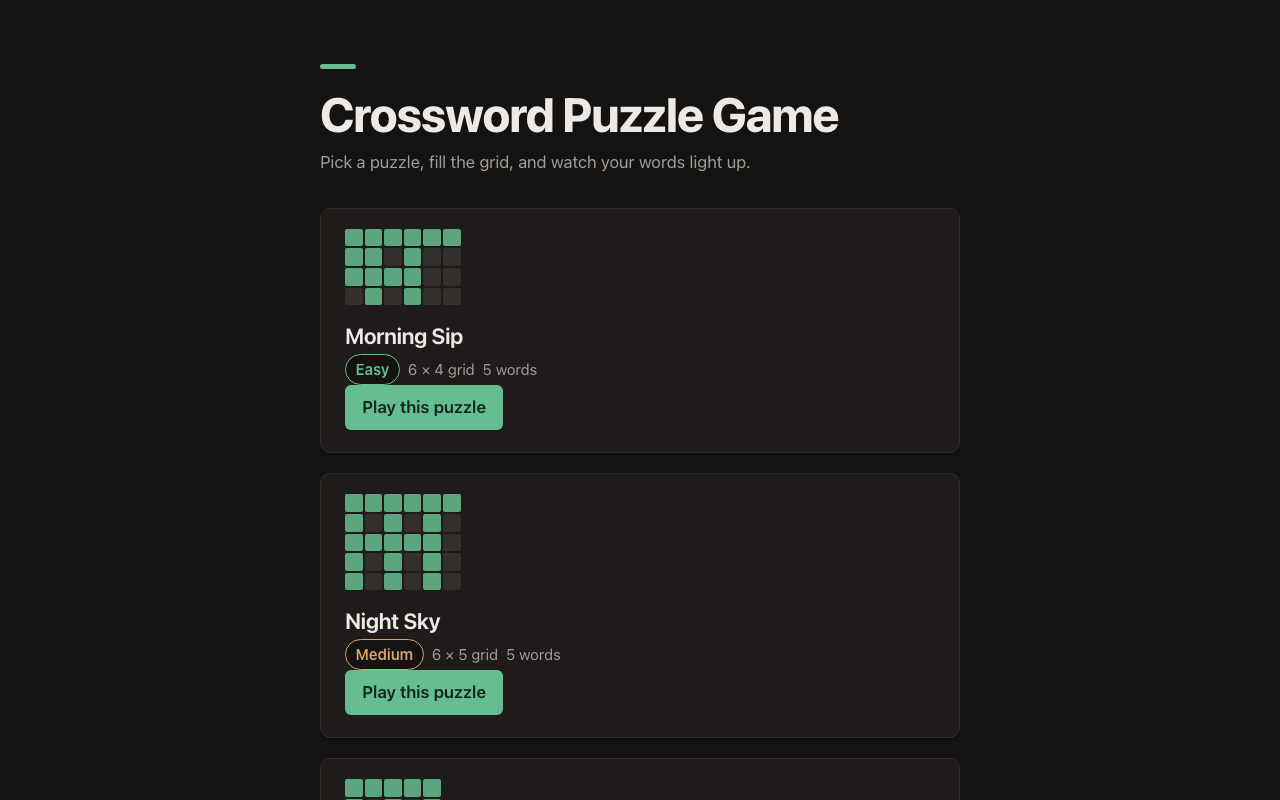
Asked for
Make a crossword puzzle game with 3 boards to complete, users can select which board and play. When you get a word right it shows the user.
Crossword Puzzle Game
5 changes · $7.08 all in
-
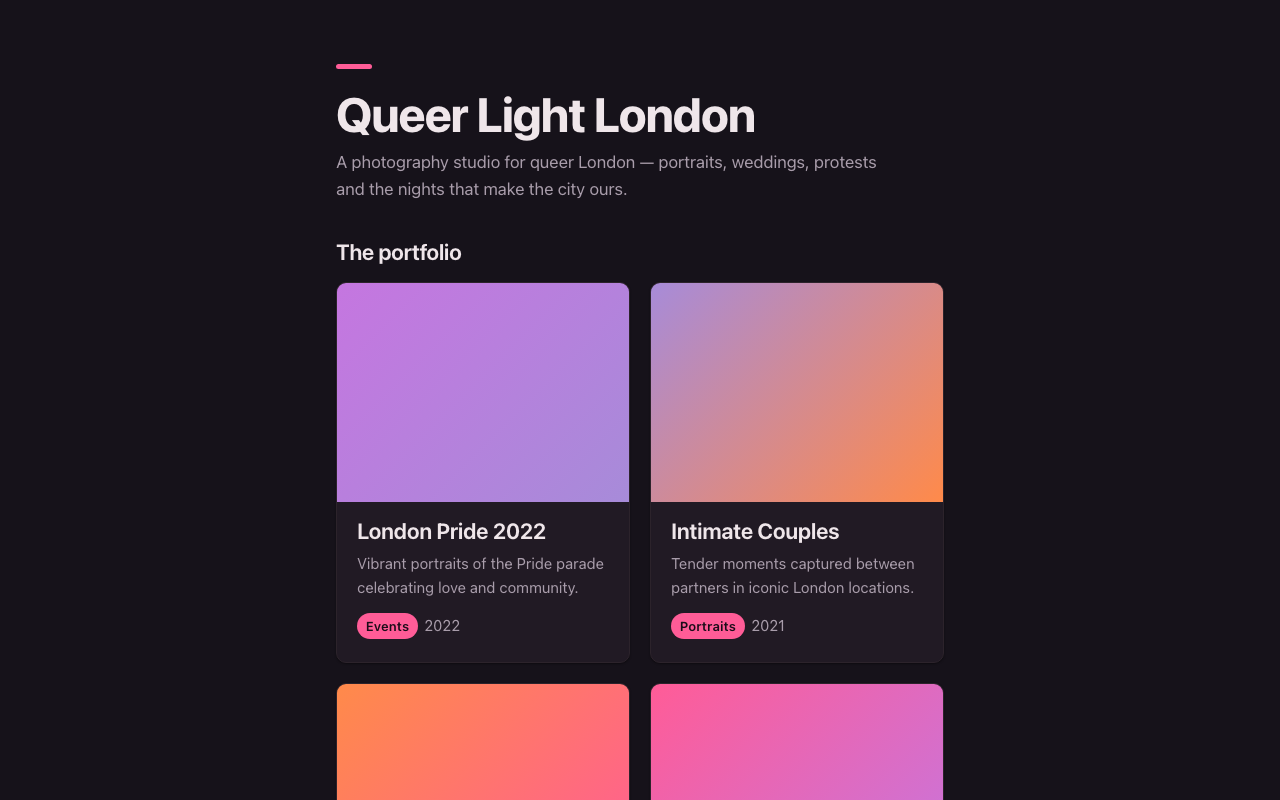
Asked for
A beautiful portfolio website for my queer photography studio in London!
Queer Light London
3 changes · $1.73 all in
-
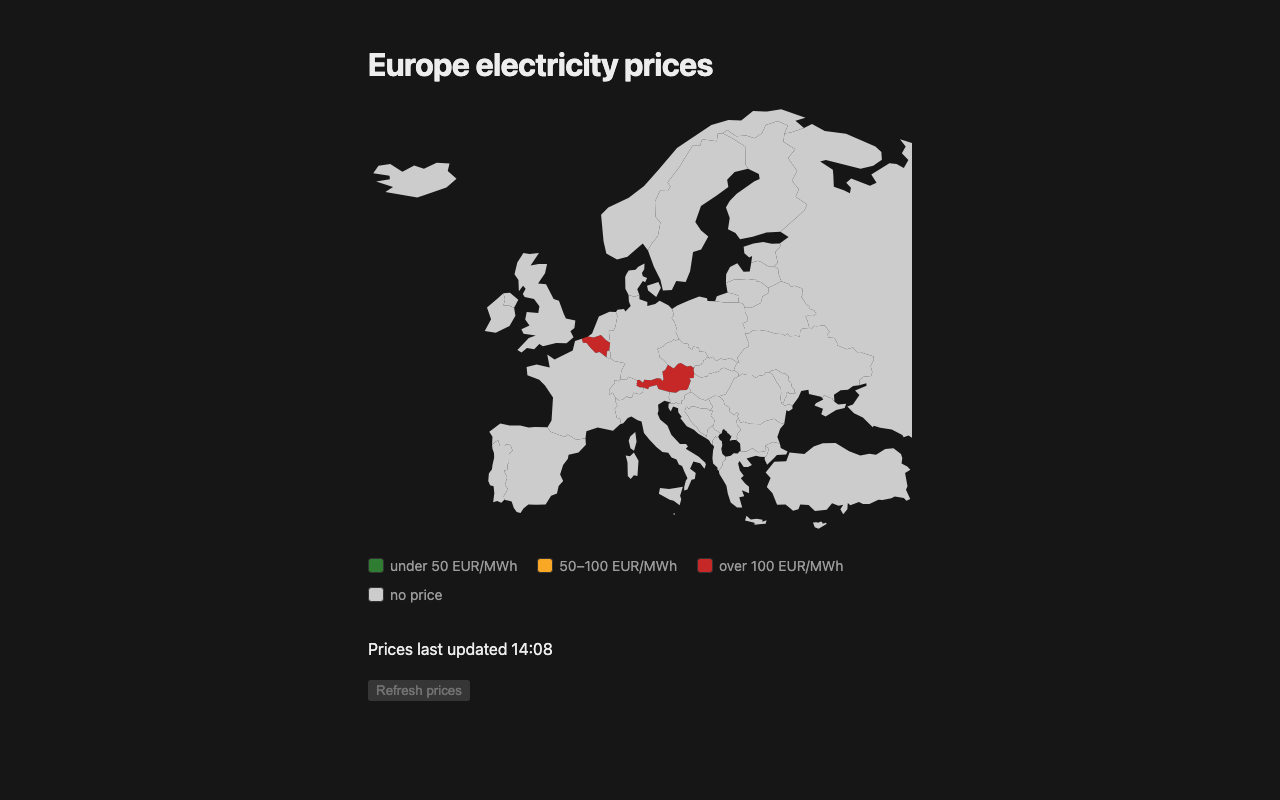
Asked for
I want a map of Europe where you can see the energy prices in realtime for each country
Europe Energy Map
16 changes · $15.56 all in
Costs are everything spent on each product, model calls and container time, read from the ledger on 30 August 2026. Pictures are the live pages as captured on 2 September 2026.
Why a factory
Prototyping tools make demos.
Factories make products.
v0, Bolt and Lovable are great for a Friday-afternoon prototype. Shipyard is built for the application you will still be running in five years.
Your credentials stay out
The sandbox never holds your tokens. Repository access goes through an authenticated proxy outside the box — code inside can't leak a credential it never had.
Every change is a pull request
An audit trail and a revert point, on a repository you can download whole. Approved work merges on its own; the pull request is your record of it.
Nothing ships that the reviewer rejected
Work it refuses comes to you with a preview and three buttons, and anything touching the factory's own rules waits for a person whatever else is true.
Questions
Asked and answered.
What does it cost?
Nothing during the beta. There is no card, and every factory has a ceiling of $2 a day that it cannot spend past — you can lower it, and the factory stops at it rather than asking. What you can already see is the arithmetic we will price from: the ledger above is $0.51 of model spend per change that shipped. When there is a price it will be per change, and you will meet it before it costs you anything.
Why is it invite-only?
Every factory on the platform draws on one shared spending limit, so a handful of very busy factories could leave a newcomer with an error nobody explained. We let people in as that room exists. Describe your product above and sign in: you are on the list with your brief, and the sign-in link arrives by email when it is your turn. Already have an account? You are in — nothing changes for you.
Who owns the code?
You do, under your license. Download the whole thing as a zip whenever you like — no GitHub account needed — and if you leave Shipyard tomorrow you keep the code and the deployed app. Want it in your own GitHub instead? Ask and we will transfer it.
Is it safe to let it run unattended?
Every build runs in a fresh sandbox on Cloudflare's infrastructure, created for the run and destroyed after it, with no credentials inside. The budget is a precondition the code checks before every model call, not a policy someone follows. And a run that stops early is a short report on the dashboard and one email, never a surprise bill.
What happens when the factory gets stuck?
It stops and says so, plainly, with what it tried and what it spent. If the reviewer and the engineer cannot settle it, you get the question, a preview of the change, and the choice to ship it, send it back with a note, or drop it.
Which stacks do you support?
Web products first: a static site with a small server for fetching data, in JavaScript, deployed on Cloudflare. TypeScript and Node.js applications next, and more as we learn which ones people actually ask for. Tell us what you run — hello@ship-yard.app reaches a person.
Is my code used to train models?
No.
What will your factory ship?
Describe the product. Watch a team plan it, build it, review it, and ship it — inside a budget it cannot exceed. Free during the beta; invite-only for now.